
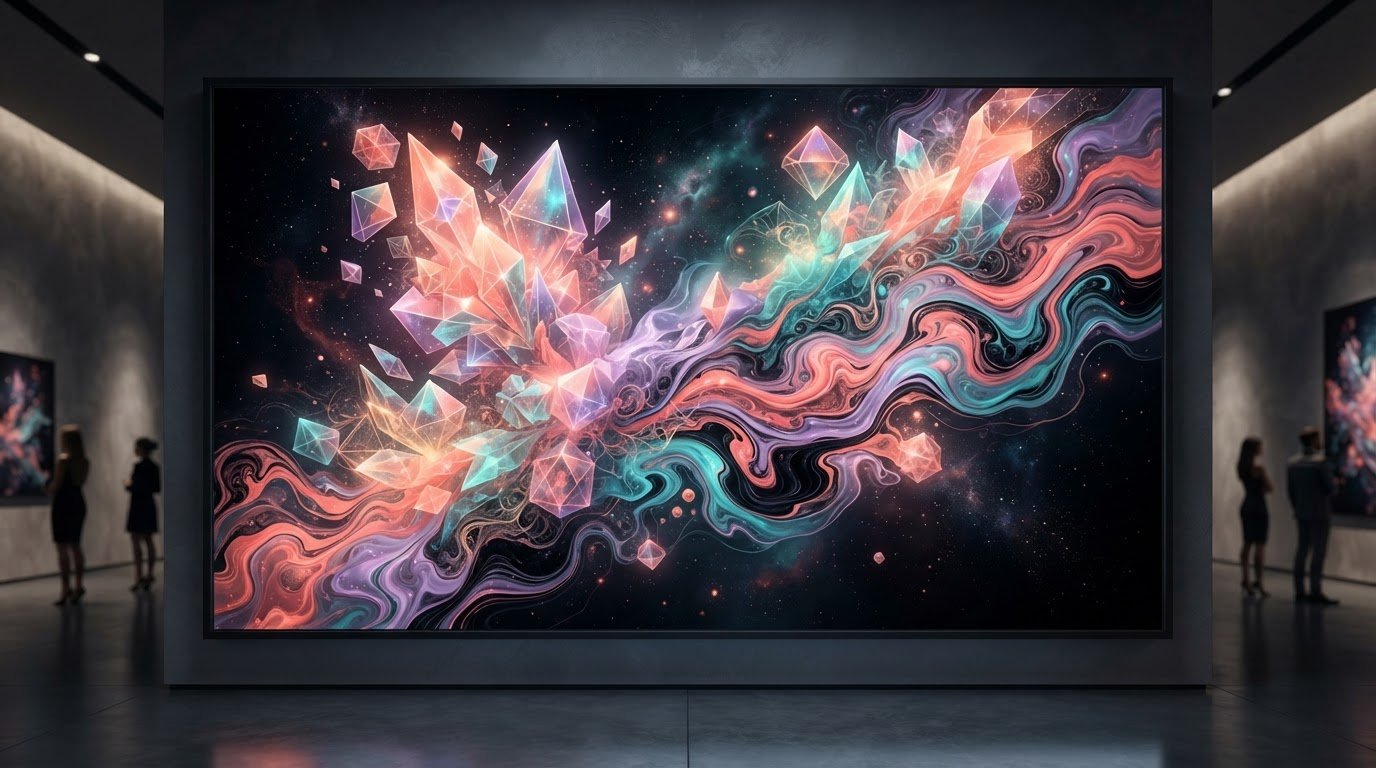
The digital art market is no longer defined by NFTs. After the speculative boom and correction, the market is moving toward a more mature model where the artwork, artist, provenance, and collecting experience matter more than the technology attached to the work.
Digital art has become part of the broader contemporary art market, with collectors, galleries, institutions, and artists increasingly exploring digital, generative, immersive, and blockchain-based work.
Key Takeaways
- Digital art is becoming a mainstream collecting category. In 2025, 51% of surveyed high-net-worth collectors purchased digital art, making it the third most acquired medium after painting and sculpture.
- NFTs are no longer the entire digital-art story. Blockchain can provide provenance and ownership records, but technology alone does not establish artistic or market value.
- AI is changing how digital art is created. As generative tools make image production easier, artistic identity, concept, process, and a recognizable body of work become increasingly important.
- The art market is becoming more hybrid. Collectors increasingly discover art online while continuing to buy through galleries, fairs, exhibitions, and direct relationships with artists.
- Discovery matters more as competition increases. Collectors looking beyond established names need better ways to identify promising artists before they become widely recognized. Discovering emerging artists before the crowd is becoming an increasingly important part of the collecting process.
Digital Art Is Becoming Part of Mainstream Collecting
Current collector data shows that digital art has maintained meaningful demand. The 2026 Art Basel and UBS Global Art Market Report found that 51% of surveyed high-net-worth collectors purchased digital art in 2025, making digital art the third most acquired medium after painting and sculpture.
That does not mean every digital artwork has value. It shows that digital work has become part of the collecting landscape rather than a niche category associated exclusively with cryptocurrency.
As the market becomes more crowded, identifying artists before they receive widespread attention becomes increasingly important. Collectors looking beyond established names can use a more deliberate approach to discovering emerging artists before the crowd, particularly when evaluating artists whose practices are developing outside traditional market channels.
NFTs Are No Longer the Whole Story
NFTs introduced a way to establish digital scarcity and record transactions on blockchain networks. But the NFT boom also demonstrated the limits of treating technology as a substitute for artistic value.
Today, blockchain can still provide useful provenance and ownership records, but collectors are increasingly evaluating the underlying artwork, the artist’s practice, and the rights attached to the purchase.
The technology supports the market. It does not create the market by itself.
AI Is Changing Digital Art Again
Artificial intelligence is creating another major shift in digital art. Artists can now incorporate generative systems into image-making, animation, video, interactive experiences, and other forms of creative practice.
This creates both opportunity and competition.
When images can be produced at enormous scale, simply creating an impressive image becomes less distinctive. An artist’s concept, process, recognizable style, and body of work become increasingly important to differentiation.
Digital artists are also pushing beyond straightforward image-making into work that challenges how viewers understand reality, perception, and experience. That broader creative territory is explored in the art of making two realities exist at once, where technology becomes part of a larger artistic idea rather than the entire point of the work.
The Market Is Becoming Hybrid
Digital discovery does not necessarily mean digital-only collecting.
The broader art market reached an estimated $59.6 billion in 2025, while online-only sales declined to $9.2 billion, according to the Art Basel and UBS report. Collectors continue to combine online discovery with galleries, art fairs, exhibitions, and direct relationships with artists.
That points toward a hybrid future where digital and physical art markets increasingly overlap.
What This Means for Artists and Collectors
For artists, the opportunity is no longer simply to sell an NFT. The bigger opportunity is to build a recognizable artistic practice that can attract collectors across websites, galleries, exhibitions, digital platforms, and emerging technologies.
For collectors, digital art requires many of the same questions as traditional art: Who created it? What makes it significant? What is the provenance? What rights are included? How will the work be preserved?
The future of digital art will not be determined by the next blockchain or the next technology trend.
Technology can create new ways to make, experience, and own art. Artistic value still has to come from the work itself.
Sources
- Art Basel, Decoding the Art Market: The Future of the Art Market
Art Basel: The Future of the Art Market - Art Basel & UBS, The Art Basel and UBS Global Art Market Report 2026
Art Basel & UBS Global Art Market Report 2026 - Art Basel, Digital Art and the New Collector
Art Basel: Digital Art & Collectors