
How to Discover Emerging Artists Before the Crowd
How collectors discover artists before broad consensus forms, what they actually look for, and how to investigate an artist without letting the market do the thinking for you.
Learning how to discover emerging artists before broad consensus forms requires more than finding someone with a small following or an impressive Instagram feed. The real challenge is recognizing an artist whose work deserves closer attention before the market has already supplied the explanation.
How collectors discover artists before broad consensus forms, what they actually look for, and how to investigate an artist without letting the market do the thinking for you.
The art world is very good at making discovery look easy after the fact.
Once an artist has museum exhibitions, major gallery representation, serious press coverage, auction results, and a growing collector base, the story often gets told as though the clues were obvious all along. Someone “spotted the talent early.” Someone else “knew before everyone else.” The market appears to have been waiting patiently for the right collector to notice what was already there.
Real discovery is rarely that clean.
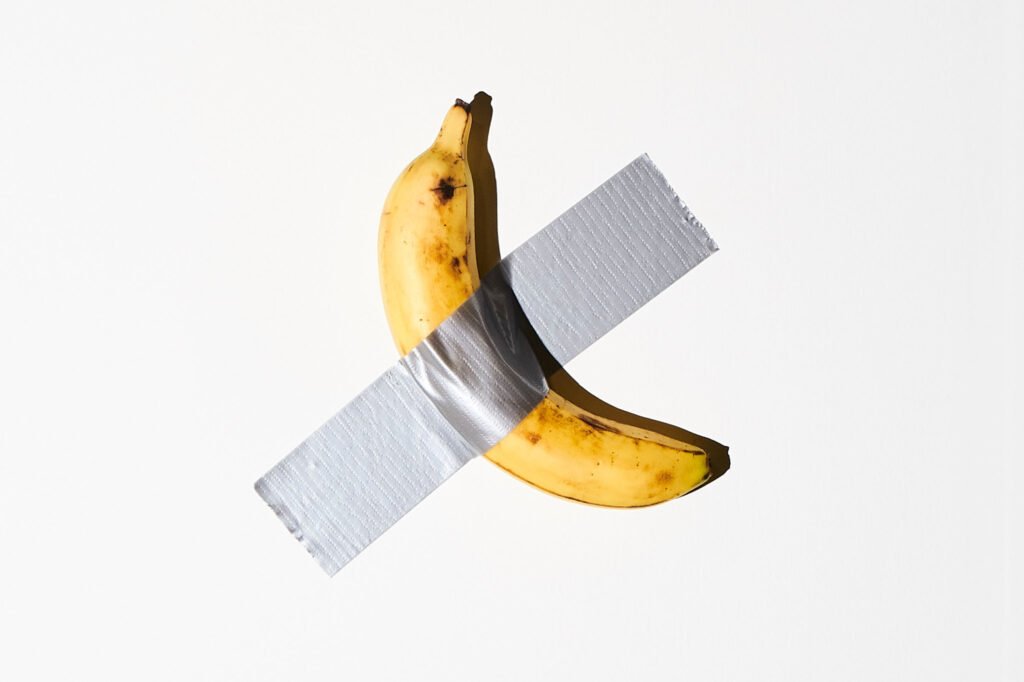
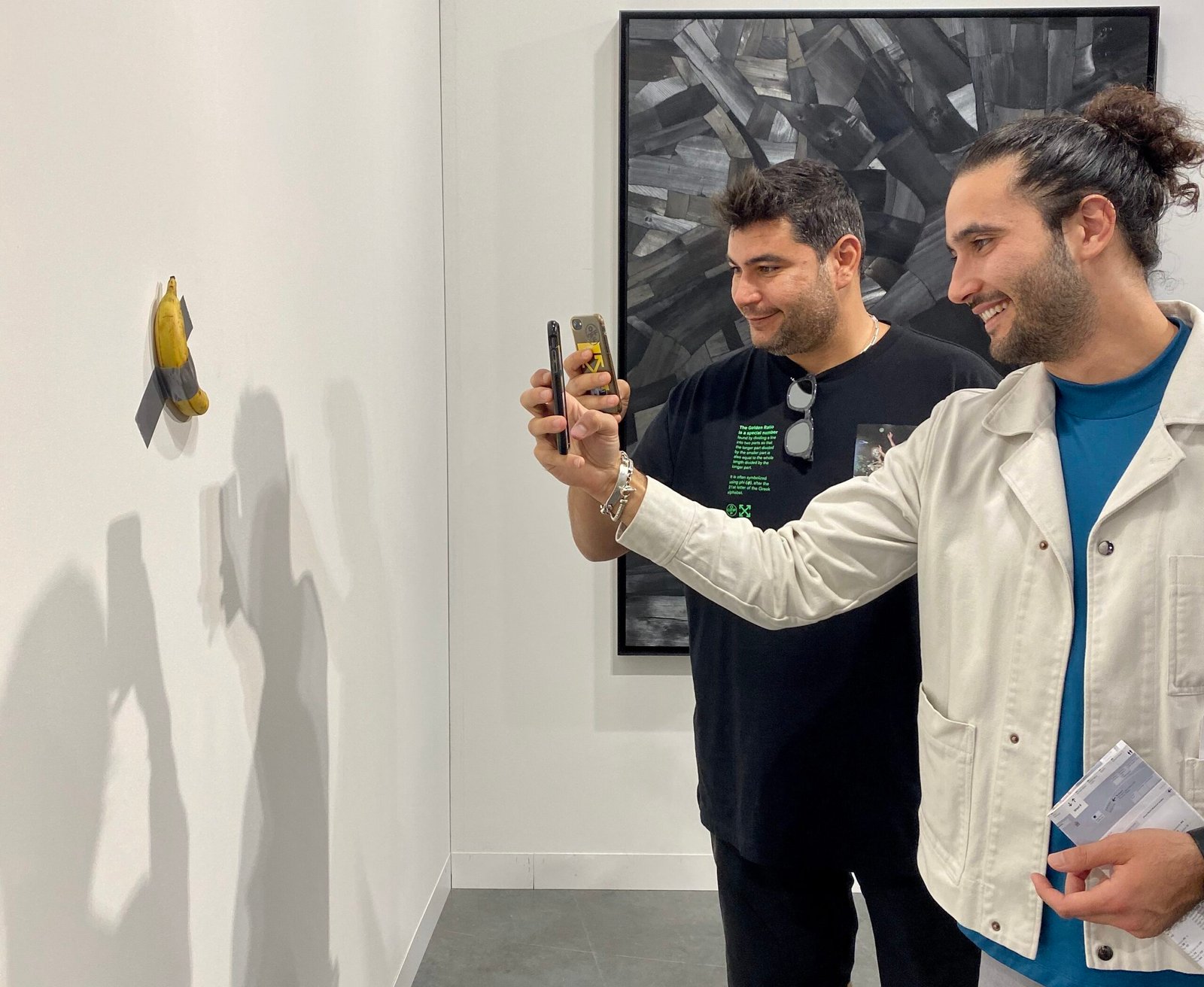
Consider Maurizio Cattelan’s Comedian, the banana duct-taped to a wall at Art Basel Miami Beach in 2019. The work was priced at $120,000, and two of its three editions had sold during the VIP preview. It came with a certificate of authenticity, and owners could replace the banana as necessary. [1]
The interesting question is not whether a banana was worth $120,000. It is why anyone would have enough confidence in the artist, the work, the concept, and the context surrounding it to buy something that initially looked almost impossible to take seriously.
That question gets to the heart of early discovery.
Key Takeaways
- Discovering an artist early does not necessarily mean discovering an unknown artist. It means encountering the work before broad consensus has formed around it.
- There is no single path to discovery. Collectors find artists through galleries, fairs, studios, exhibitions, publications, social media, online platforms, recommendations, and direct relationships with artists.
- Artistic signals and market signals answer different questions. One concerns the strength and development of the work; the other concerns how the surrounding art world is responding to it.
- Current collector research shows that newly discovered artists are a significant part of contemporary collecting, while digital channels and direct relationships with artists continue to change how discovery happens. [2][3]
- The goal is not to predict “the next big artist.” It is to understand what you are seeing well enough to make an informed decision before consensus does the thinking for you.
What Does It Actually Mean to Discover an Artist Early?
Early discovery is often confused with finding someone before anybody else has heard of them.
That is not necessarily what happens.
An artist may already have a gallery, collectors, exhibitions, publications, or an active online following and still be early in the broader market. A collector who encounters that artist before institutional recognition, widespread critical attention, or substantial secondary-market activity may still be participating in an early stage of the artist’s development.
The distinction matters because art does not move through the market in a single sequence. An artist can be well known in one community and almost invisible in another. A collector might encounter the work through a studio visit while another discovers it through Instagram months later. A curator may have been following the artist for years before a major gallery introduces the work to a much wider audience.
Being early, therefore, is less about being first than about recognizing an artist’s work before the market has created a widely accepted interpretation of its importance.
The Art Market Does Not Have One Discovery Pipeline
There is no universal route from artist to collector.
Some collectors begin with research. They follow galleries, read publications, visit exhibitions, watch institutional programming, and pay attention to artists whose work is appearing repeatedly in serious contexts.
Others begin with an emotional reaction to a particular work and investigate afterward. Some discover artists socially, through another collector, a dinner, a studio visit, or a recommendation from someone whose taste they trust. Others encounter an artist entirely through digital channels.
Increasingly, those paths overlap.
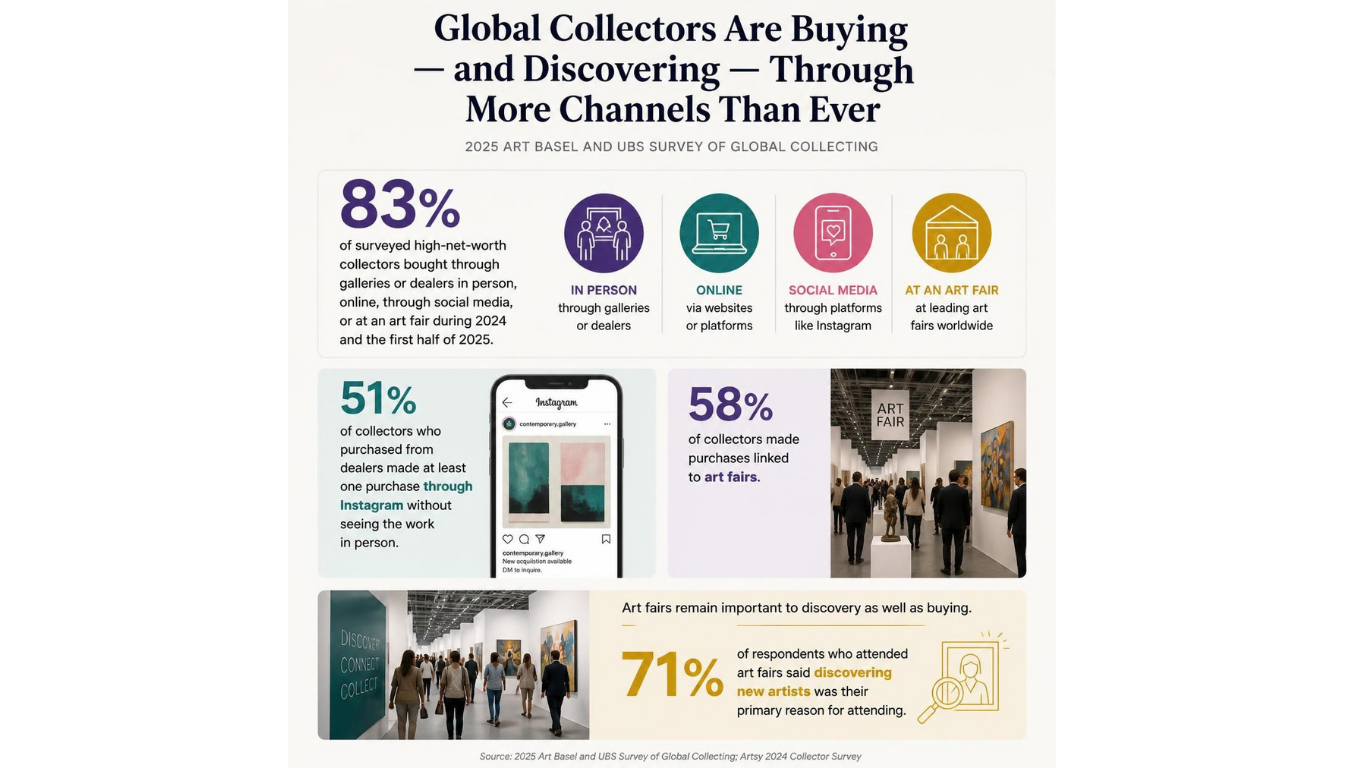
Image source: AI-generated by Canva Magic Media, September 30, 2026.
The 2025 Art Basel and UBS Survey of Global Collecting found that 83% of surveyed high-net-worth collectors had bought through galleries or dealers in person, online, through social media, or at an art fair during 2024 and the first half of 2025. Among those who purchased from dealers, 51% had made at least one purchase through Instagram without seeing the work in person, while 58% of collectors made purchases linked to art fairs. [2]
Art fairs remain important to discovery as well as buying. In Artsy’s 2024 collector survey, 71% of respondents who attended art fairs said discovering new artists was their primary reason for attending. [3]
Discovery can therefore happen before the traditional art-market machinery becomes involved, inside that machinery, or somewhere between the two.
Digital Discovery Has Changed the Starting Point
The internet did not eliminate galleries, fairs, or exhibitions. It changed how many collectors arrive at them.
Artsy’s 2024 collector research, based on responses from 2,154 collectors in more than 70 countries, found that 82% of collectors aged 36 or younger had purchased art online. Forty-seven percent of younger collectors said they discovered artists and purchased their work through online marketplaces. [3]
Digital discovery is therefore not simply a way to browse art after traditional discovery has already happened. For many collectors, particularly younger ones, it is part of the discovery process itself.
That does not make a screen equivalent to seeing art in person. It means the first encounter can happen almost anywhere.
A collector might see an image in a social post, investigate the artist’s website, discover a gallery exhibition, read an interview, watch a studio video, and eventually see the work in person. The discovery process is increasingly nonlinear, which makes the collector’s ability to investigate what they are seeing more important rather than less.
What Makes Early Discovery Difficult?
The problem is not a shortage of information. It is the opposite.
A collector can now encounter hundreds of artists in a single evening. Instagram can provide images without context. Online marketplaces provide searchable inventories. Galleries publish exhibitions continuously. Museums, fairs, critics, artists, and collectors all contribute to an enormous stream of information.
The difficulty is determining which information actually helps you understand the artist.
An impressive exhibition photograph tells you something about visibility. A respected gallery tells you something about professional context. A museum exhibition tells you something about institutional attention. A strong body of work tells you something different. None of those signals, individually, establishes the complete picture.
Early discovery requires holding several kinds of evidence together without allowing any one of them to substitute for judgment.
Artistic Signals and Market Signals Are Not the Same Thing
This distinction is one of the most useful tools a collector can develop.
Artistic signals concern the work itself. Is there a recognizable point of view? Does the artist appear to be developing an idea rather than repeating a successful formula? Does the body of work show sustained investigation? Is there enough substance to remain interesting beyond the first encounter?
Market signals concern the response surrounding the work. Are credible galleries exhibiting it? Are curators writing about it? Are collectors returning? Is the artist being invited into meaningful exhibitions or institutional contexts? Is there sustained demand rather than a short burst of attention?
The two categories can reinforce each other, but they should not be confused.
An artist can have strong market visibility while the work is still developing. Another artist can make compelling work while receiving little market attention. The collector trying to discover early has to be able to recognize both situations.
What Current Collector Data Tells Us About Discovery
Recent collector data suggests that buying work by newly discovered artists is not an unusual behavior confined to a tiny group of adventurous buyers.
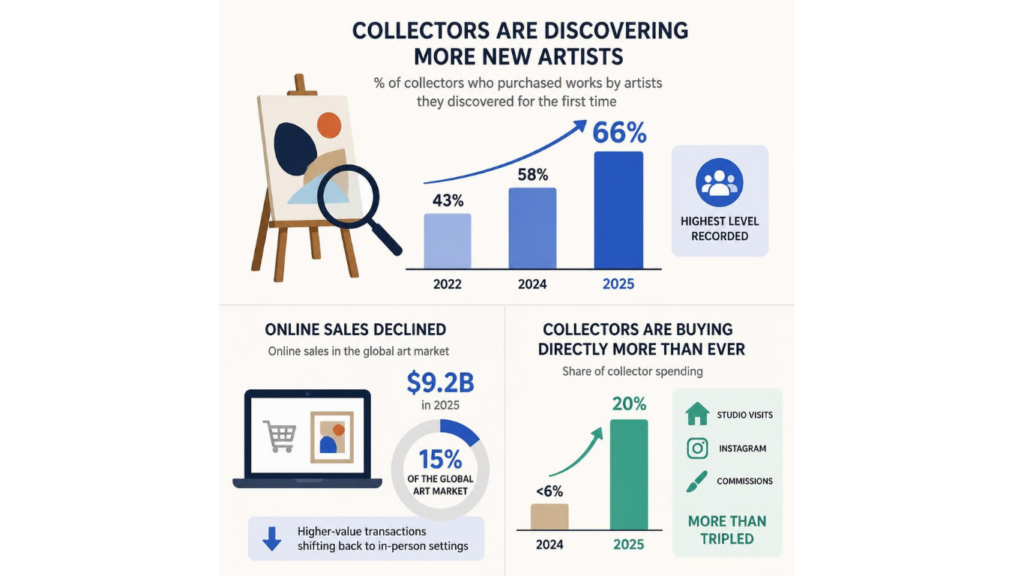
Image source: AI-generated by Canva Magic Media, September 30, 2026.
The 2025 Art Basel and UBS Survey of Global Collecting found that 66% of surveyed high-net-worth collectors had purchased works by artists they discovered for the first time in 2025. That was the highest level recorded in the survey series and compares with 58% in 2024 and 43% in 2022. [2]
That statistic does not mean these artists were unknown. “Newly discovered” means new to the collector.
That distinction is important because it reveals something about how collecting actually works. The art market can become increasingly visible while individual collectors continue to encounter artists for the first time.
The channels are changing as well. Online sales fell to $9.2 billion in 2025 and represented 15% of the global art market, while higher-value transactions increasingly shifted back toward in-person settings. [4]
At the same time, Art Basel reported that artist studio visits saw a greater rise in attendance in its 2025 collector survey than exhibitions, biennials, auctions, or fairs. Buying directly from artists through studio visits, Instagram, or commissions more than trebled as a share of collector spending, reaching 20%. [5]
Digital discovery and physical engagement are therefore not opposing systems. They are increasingly part of the same collector journey.
Why Would a Collector Buy Before the Consensus?
Buying before broad consensus requires accepting that certainty is unavailable.
That does not necessarily mean taking reckless risks. It means understanding that the market cannot provide a finished answer at the moment when discovery is most interesting.
The collector may be responding to the work itself, to an artist’s developing practice, to a particular cultural conversation, or to the experience of encountering the artist directly. The motivation can be aesthetic, intellectual, emotional, social, financial, or some combination of these.
The 2026 Art Basel reporting on the collector survey found that only 24% of high-net-worth collectors identified financial investment as their single most important motivation for buying art. Twenty percent identified self-focus and pleasure, while 17% cited social motivations. [5]
The collector who discovers an artist early does not necessarily want to make a market prediction. They may simply want to own something they find compelling before the opportunity becomes harder to access.
What Can a Studio Visit Tell You?
A studio can reveal information that photographs cannot.
You can see how much work exists, how the artist moves between ideas, whether the practice extends beyond a single successful image, and what questions seem to occupy the artist over time. You can also see the relationship between finished work and everything that does not make it to the wall.
This does not mean a studio visit magically reveals artistic quality. Artists are presenting themselves too, and a compelling studio can create its own form of persuasion.
Its value is that it adds another layer of evidence.
Current collector behavior supports the growing importance of direct engagement. In the 2025 Art Basel and UBS survey, 43% of surveyed high-net-worth collectors bought directly from artists’ studios, 37% commissioned works, and 35% purchased through Instagram. Overall, 63% purchased directly from an artist, up from 43% in 2022. [2]
For a collector interested in early discovery, direct access can make the artist’s development easier to understand.
How to Research an Artist You Want to Watch
Research should clarify your judgment, not replace it.
Start with the body of work rather than the biography. Look at enough pieces to determine whether you are responding to one exceptional image or to a sustained practice. Then examine how the work has changed. Development is often more informative than polish because it shows whether the artist is investigating something rather than simply repeating what already receives attention.
Then examine context.
Who has exhibited the artist? Where? What kind of writing exists about the work? Are collectors engaging with the practice directly? Has the artist participated in meaningful exhibitions or conversations? Does the professional infrastructure around the artist appear coherent, or is the attention concentrated almost entirely in one digital channel?
Finally, investigate the practical side of collecting. Understand what you are buying, its dimensions, medium, edition or uniqueness, provenance where applicable, certificate documentation, pricing, shipping, and the terms of the transaction.
Artsy’s 2024 research found that 46% of collectors identified insufficient information about the work, excluding price, as a hindrance to purchasing art online. Ninety-five percent said seeing a listed price was important when purchasing art online. [3]
Good research does not kill the emotional experience of collecting. It gives that experience enough context to become a decision rather than an impulse.
Looking at the Practice Before the Market Story
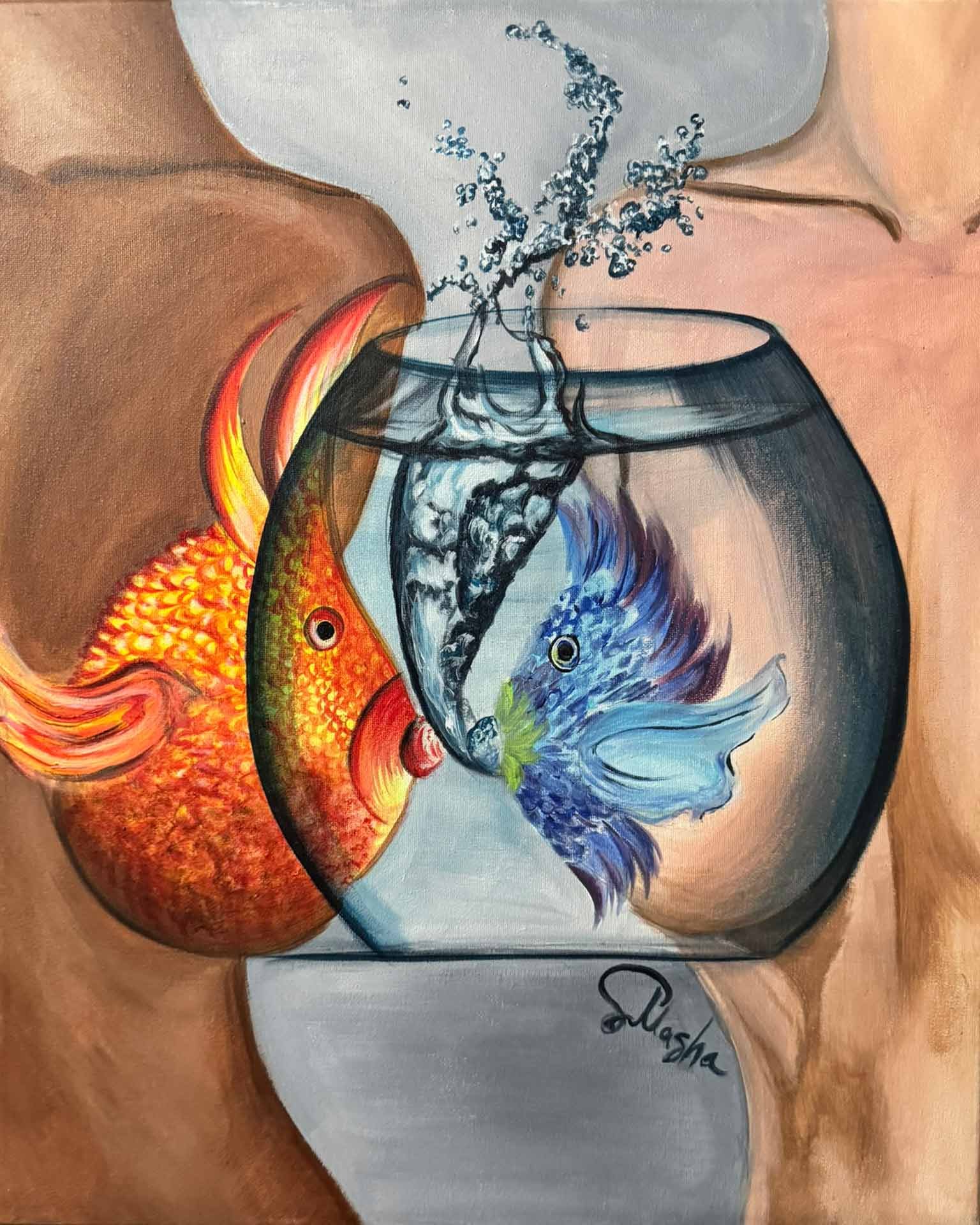
Masha Schwartz
Fish Bowl
Masha Schwartz Art
Buy Original – $19,000 USD | Other Artworks by this Artist
What changes when you encounter an artist through the work first, rather than through the market story surrounding it?
Masha Schwartz Art provides a useful example of why the work itself should remain central to discovery. Surreabstract Art is built around the coexistence of recognizable and abstract visual realities, creating images that can be interpreted without resolving into a single fixed reading.
For a collector, the relevant question is not whether the artist will eventually receive some particular level of recognition. It is whether the work has enough visual and conceptual substance to reward continued attention now.
That is a more useful question because it can actually be investigated.
How to Evaluate an Artist You Want to Watch
Look for a body of work rather than a single hit.
A strong body of work does not have to be uniform. In fact, meaningful variation can be evidence of an artist testing the boundaries of an idea. What matters is whether the work remains connected by a recognizable intellectual or visual investigation.
Pay attention to development. Does the artist’s work become more resolved, more complex, or more specific over time? Are new works extending previous questions or simply changing appearance? Can you identify an underlying practice even when the individual pieces differ?
Then look outward without letting the outside world make the decision for you. Gallery representation, exhibitions, critical writing, institutional attention, collector interest, and direct engagement can all provide useful context. They become more informative when considered together rather than treated as badges of importance.
Finally, ask whether you would still want the work if nobody had told you that other people were interested in it.
That question will not tell you whether to buy. It tells you whether your interest belongs primarily to the work or to the social proof surrounding it.
What the Signals Can Tell You
Signals become useful when you understand exactly what they measure.
A gallery relationship can tell you that a professional has decided to invest resources in the artist. A museum exhibition can indicate institutional interest in the work. Critical writing can reveal how the practice is being interpreted. Repeat collector engagement can indicate that interest extends beyond a single transaction.
Those signals become more useful when they point in different but compatible directions. A collector can compare the development of the work with the development of the surrounding attention rather than treating any single institutional, commercial, or social signal as proof of future success.
The Art Basel and UBS survey illustrates how diversified the discovery and purchasing environment has become: collectors are using galleries, art fairs, Instagram, studios, commissions, auctions, and other channels rather than following one fixed route from discovery to acquisition. [2]
For the collector, the useful question is not simply whether an artist is “validated.” It is what each piece of evidence actually tells you and whether different forms of evidence point toward a coherent picture.
Why “The Next Big Artist” Is the Wrong Question
“The next big artist” sounds like a useful category because it promises an answer to a difficult problem.
In reality, it turns collecting into a prediction contest.
Once an artist becomes successful, earlier decisions are easy to reinterpret as evidence that someone possessed unusual foresight. The collector who bought early looks brilliant because the outcome is already known. What disappears from the story are the many artists who generated similar early excitement without following the same trajectory.
A more useful question is: What is this artist doing now that makes the work worth paying attention to?
That question keeps the collector focused on evidence that actually exists. It allows room for uncertainty while still demanding serious observation.
The objective is not to know the future. It is to understand the present unusually well.
What Happens After You Find an Artist?
Discovery is only the beginning.
If the work interests you but you are not ready to buy, follow the artist. Look at new work. Revisit older work. Pay attention to exhibitions, interviews, studio developments, and changes in the way the practice is being discussed.
Time can reveal things that a first encounter cannot.
An artist who looked promising six months ago may be developing in an unexpected direction. Another may demonstrate that the initial work was the beginning of a much deeper practice. Following the artist allows the collector to see development rather than relying on a single moment.
This is one reason early discovery can be valuable even when it does not immediately lead to a purchase. The collector has created a longer window in which to learn.
The Collector’s Real Advantage
The real advantage of discovering an artist early is not bragging rights.
It is access to more information before making a decision.
You have more time to see the work develop, more opportunity to encounter different pieces, and potentially more opportunity to engage directly with the artist or gallery. In 2024 and the first half of 2025, artist-direct purchases accounted for 20% of surveyed high-net-worth collectors’ art spending by value, making direct artist sales the second-largest spending channel after dealers. [2]
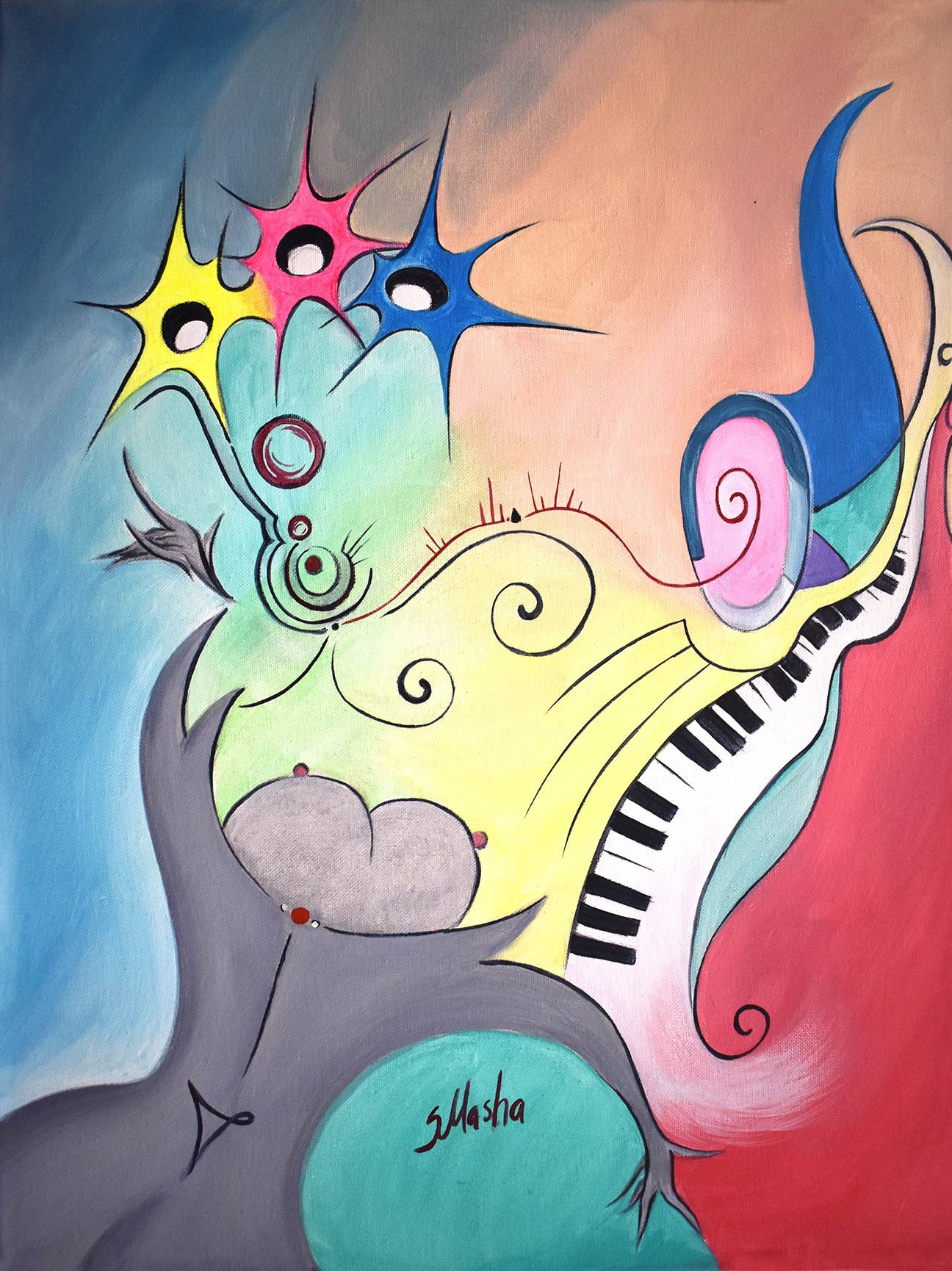
Masha Schwartz
Maestro
Masha Schwartz Art
Buy Original – $25,920 USD | Other Artworks by this Artist
The strongest discovery is not always the work you understand immediately. Sometimes it is the work you keep returning to.
Discovery Is Becoming More Personal
The modern collector has more ways to encounter art than previous generations did, but greater access does not automatically produce better judgment.
A collector can discover an artist through a gallery in New York, a studio in Miami, an Instagram post, a museum exhibition, an art fair, an online marketplace, or a recommendation from another collector. Those routes may eventually lead to the same artist, but the collector’s relationship with the work begins differently in each case.
The most interesting development is that the distance between artist and collector is becoming shorter.
That can make collecting more personal, but it also places more responsibility on the collector. When discovery happens outside traditional gatekeeping structures, the collector has to do more of the contextual work themselves.
The Collector Who Finds the Artist Before the Crowd
Finding an artist before broad consensus forms is not about possessing some mysterious ability to predict the future.
It is about learning how to look before the market has finished explaining what you are looking at.
The collector who develops that ability does not ignore galleries, museums, critics, fairs, social media, or market data. They use those sources as evidence while maintaining an independent relationship with the work. They can appreciate recognition without requiring recognition to create their interest in the first place.
That is a more durable form of collecting intelligence.
You may never know whether an artist will become widely recognized. You can know whether the work has given you enough reason to keep looking.
Final Thought
By the time consensus arrives, discovery has already become history.
The artist has a larger audience. Prices may have changed. Galleries may have become more selective. Institutions may have entered the conversation. The work may suddenly seem easier to understand because thousands of other people are now talking about it.
The earlier collector had none of that certainty.
What they had was the work, the surrounding evidence, their own judgment, and enough curiosity to investigate before someone else supplied the answer.
That is what makes early discovery interesting. It is not about being right before everyone else. It is about learning how to see for yourself.
Frequently Asked Questions
What does it mean to discover an artist early?
It generally means encountering and seriously considering an artist before broad market or institutional consensus has formed around the artist. The artist does not necessarily have to be unknown or completely new.
How do collectors discover emerging artists?
Collectors use many routes, including galleries, art fairs, exhibitions, museums, studio visits, publications, social media, online marketplaces, recommendations, and direct relationships with artists.
Is social media a reliable way to discover artists?
It can be a useful discovery channel, but visibility on social media is not the same thing as artistic or market validation. The work and the broader context still need to be investigated.
What should I look for when evaluating an artist?
Start with the body of work. Look for a distinctive practice, meaningful development, sustained investigation, and evidence that the artist is doing more than repeating a single successful formula. Then examine the surrounding professional and market context.
Does gallery representation mean an artist is worth collecting?
Gallery representation is useful contextual information, but it does not determine whether an artwork is right for a particular collector. It should be considered alongside the work itself, the artist’s development, and other evidence.
Should I buy art by an artist before they become well known?
Recognition is not the only reason to collect. A collector can decide to buy because the work is meaningful, compelling, intellectually interesting, or appropriate for their collection. If future recognition matters to the decision, it should be treated as uncertain rather than assumed.
Can you really identify the next major artist?
No method can reliably establish future artistic or market success in advance. What a collector can do is become better at identifying strong work, understanding an artist’s development, and distinguishing evidence from speculation.
What is the biggest advantage of discovering an artist early?
Time. You have more opportunity to study the work, follow the artist’s development, experience different pieces, and make a decision without relying entirely on an already-established consensus.
Sources
[1] Artsy. “Maurizio Cattelan’s duct-taped banana work sold during Art Basel in Miami Beach’s VIP preview.” December 4, 2019.
https://www.artsy.net/article/artsy-editorial-maurizio-cattelans-duct-taped-banana-work-sold-art-basel-miami-beachs-vip-preview
[2] Art Basel & UBS. The Art Basel & UBS Survey of Global Collecting 2025.
https://theartmarket.artbasel.com/download/The-Art-Basel-and-UBS-Survey-of-Global-Collecting-in-2025.pdf
[3] Artsy. “Art Collector Insights 2024.” September 19, 2024.
https://www.artsy.net/article/artsy-editorial-art-collector-insights-2024
[4] Art Basel & UBS. The Art Basel & UBS Art Market Report 2026.
https://theartmarket.artbasel.com/download/The-Art-Basel-and-UBS-Art-Market-Report-2026-by-Arts-Economics.pdf
[5] Art Basel. “Art Market Report: Are experiences the new luxury good?” August 14, 2026.
https://www.artbasel.com/stories/art-basel-report-2026-collectors-experiences